
The post Finding and Living With a Roommate in Austin: A Renter’s Guide appeared first on SOFI at 6311 Blog.
]]>TL;DR
- A roommate can meaningfully cut your housing cost in Austin — often the fastest way into a nicer or better-located apartment.
- Get every roommate on the lease (or on separate leases where offered); a handshake deal leaves you exposed.
- Understand joint and several liability: if your roommate stops paying, the landlord can come after you for the full rent, not just their share.
- Write a roommate agreement while everyone's still friendly — it settles rent, utilities, and chores before they become fights.
- SOFI at 6311 offers two-bedroom floor plans that work well for roommates in South Austin.
Splitting an apartment is one of the smartest financial moves a renter can make — especially in a city like Austin, where a roommate can turn a stretch budget into a comfortable one. But sharing a lease is also a real legal and personal commitment. Here's how to find the right roommate and set the arrangement up so it actually works.
Why a roommate makes sense in Austin
The math is simple: split a two-bedroom and your per-person housing cost usually drops well below what a comparable one-bedroom would run you solo. That savings can move you into a newer building, a better location, or just more breathing room in your monthly budget. Shared utilities, internet, and furnishing costs stack the savings further. For a lot of Austin renters — new arrivals especially — a roommate is the difference between “I can barely afford this” and “this works.”
Where to find a roommate
A few reliable routes, roughly in order of how well you'll know the person:
- People you already know — friends, coworkers, friends-of-friends. The known quantity is worth a lot.
- Vetted roommate networks — alumni groups, workplace channels, and local community groups often have housing threads where people you have some connection to are looking.
- Roommate-matching apps and sites — these widen the pool to strangers; they work, but they raise the importance of the vetting step below.
Wherever you find them, treat it a little like a small hiring decision. You're going to share a home and a financial obligation with this person.
Vet before you commit
Before you agree to share a lease, have a direct conversation about the things that actually cause friction:
- Budget and reliability. Can they comfortably afford their share? How do they handle bills? This is the single biggest predictor of whether the arrangement survives.
- Schedule and lifestyle. Early riser or night owl? Work from home? Guests often? Quiet or social?
- Cleanliness standards. Mismatched expectations here end more roommate situations than money does.
- Pets, smoking, and dealbreakers. Get these on the table before signing, not after.
If you're matching with someone you don't know, meet in person (or at least video chat), talk through the above honestly, and trust your read.
Get everyone on the lease — the legal part that matters
This is where renters get burned, so it's worth understanding clearly.
When two or more people sign one lease, most leases make you jointly and severally liable. In plain English: each of you is individually responsible for the entire rent, not just your share. If you split a $1,800 two-bedroom at $900 each and your roommate stops paying, the landlord can legally pursue you for the full $1,800 to avoid eviction — you'd then have to recover their share yourself. The Tenant Resource Center and multiple tenant-law resources describe this the same way: the group is responsible as a whole, and each person is responsible for all of it.
Two practical implications:
- Before you sign, make sure you could cover the full rent in a pinch — not just your half. That's the real risk you're taking on.
- Add roommates the right way. You can't just move someone in. Per the Texas Tenants' Union, a new roommate must be approved by the property owner, and you'll typically sign a new lease or a lease addendum adding them. Skipping this can itself be a lease violation.
One helpful exception to ask about: some communities offer separate (“by-the-bed”) leases, where each person signs only for their own room and is liable only for their own rent. If that's available and your situation is higher-risk, it's worth asking about — though many conventional communities use a single joint lease.
A related note on subletting: if you're taking over someone's room or bringing in a subtenant, Texas Property Code §91.005 requires the landlord's consent to sublease, and most leases require it in writing. Don't rely on a private handshake — get any sublet permission documented.
Write a roommate agreement while you're still friendly
A lease governs your relationship with the landlord. It does not sort out who does the dishes or how you split the electric bill — that's on you and your roommate. The fix is a simple written roommate agreement, made while everything still feels easy and theoretical.
Cover the basics:
- Rent — who pays what, and how it gets to the landlord (one payment or separate).
- Utilities and shared costs — how internet, electric, water, and streaming get split.
- Security deposit — who paid what in, and how it's returned at move-out.
- Chores and shared spaces — expectations in writing beat resentment later.
- Guests and quiet hours — set the norm early.
- What happens if someone moves out early — the single most important clause, and the one people always skip.
An internal roommate agreement doesn't change your legal liability to the landlord, but it prevents most of the disputes that make shared living miserable — and if it ever comes to recovering money, it's your record of who agreed to what.
Setting up a shared apartment
Once you've signed, a few habits keep things smooth: decide furnishing early (who owns what matters when someone moves out), set up a shared expense tracker or a splitting app, and keep the deposit and any shared purchases documented. Small systems up front prevent big arguments later.
South Austin is a practical place to share an apartment — newer two-bedroom layouts, corridor access, and a location that works for two commutes. SOFI at 6311 offers two-bedroom floor plans in 78745; schedule a tour and see if a share makes sense for you.
Frequently asked questions
Is it cheaper to have a roommate in Austin?
Usually, yes — splitting a two-bedroom typically brings your per-person cost below a comparable one-bedroom, and shared utilities and furnishing add to the savings. For many Austin renters it's the most effective way to lower monthly housing costs or afford a better location.
Should my roommate be on the lease?
Yes. Everyone living there should be on the lease or on a lease addendum approved by the property. A roommate who isn't on the lease creates risk for both of you and can be a lease violation. Adding one almost always requires landlord approval and new paperwork.
What is joint and several liability?
It means each tenant on a shared lease is individually responsible for the full rent and lease obligations — not just their share. If one roommate doesn't pay, the landlord can pursue any other roommate for the entire amount. Make sure you could cover the full rent before signing.
Can I sublet my apartment in Texas?
Only with your landlord's consent. Texas Property Code §91.005 requires landlord approval to sublease, and most leases require that permission in writing. Never rely on a verbal okay — get it documented.
Do I need a roommate agreement?
It's strongly recommended. A roommate agreement won't change your legal liability to the landlord, but it settles rent, utilities, deposits, chores, and what happens if someone leaves early — preventing most common roommate disputes. Write it while things are still friendly.
What happens if my roommate moves out early?
Under joint and several liability, you remain responsible for the full rent even if they leave. That's why a roommate agreement should spell out early-move-out terms, and why you should confirm you could cover the rent short-term while finding a replacement (who the property will need to approve).
Find a two-bedroom that works for a share
A roommate is one of the smartest ways to rent well in Austin. See two-bedroom floor plans at SOFI at 6311 in South Austin's 78745, and schedule a tour together.
The post Finding and Living With a Roommate in Austin: A Renter’s Guide appeared first on SOFI at 6311 Blog.
]]>The post Relocating to Austin from the East Coast: A Practical Guide to the First 90 Days appeared first on SOFI at 6311 Blog.
]]>- East Coasters keep moving to Austin for the same core reasons: no state income tax, lower housing costs, and an outdoor‑forward lifestyle.
- The dollar stretches further — Austin's median rent has fallen for nearly two years and sits below the national median, per the Pew Charitable Trusts.
- Austin's layout confuses transit-dependent NYC and Chicago transplants — plan to drive, and pick a location with route options.
- The first 90 days have a checklist: license, registration, utilities, voter registration.
- SOFI at 6311 is a 2025-built South Austin community with airport access on the same side of the river. Schedule a virtual tour.
If you're relocating to Austin from New York, Chicago, Miami, Atlanta, or DC, you're following a well-worn path — and most of what draws people here holds up. But the East Coast-to-Austin move is a real lifestyle shift, not just a change of address. Here's the honest version, plus a first-90-days checklist to get settled fast.
Why Austin keeps drawing East Coasters
The pull factors are consistent: no state income tax, housing that costs a fraction of coastal cities, a strong job market, and an outdoor culture that's hard to match in a dense Northeast metro. For someone trading a small, expensive apartment for more space and more take-home pay, the math is compelling.
Where do they land? Not just downtown. East Coast transplants spread across the metro by priority — walkability, commute, schools, or value. South Austin tends to win for renters who want neighborhood character and access without the central-city premium.
The cost-of-living shift
This is the headline. Texas has no individual state income tax, which means more of your paycheck stays with you — a significant change coming from high-tax states like New York or Illinois.
Housing is where the difference becomes tangible. Austin's median rent has fallen for nearly two years; the Pew Charitable Trusts reported it dropped to around $1,296 by January 2026 — below the U.S. median — as a wave of new construction reset the market. Coming from a city where a one-bedroom runs well over $3,000, the contrast is dramatic.
Two honest caveats:
- Property taxes are higher in Texas — relevant if you buy, less so if you rent.
- Run your own numbers. Don't trust a single blog; check current figures against a primary source like the U.S. Bureau of Labor Statistics before you budget.
Austin's grid vs. a real grid
Here's the adjustment NYC and Chicago transplants underestimate: Austin is not a transit city. Coming from a place where you never needed a car, you'll need one here.
The layout adds to the confusion. Austin is shaped by the Colorado River and I-35 with limited crossings, so distance doesn't equal time — a place that looks close on a map can be a long trip if it's on the wrong side of a crossing. (This is the same dynamic that makes a route with multiple options so valuable; more on that below.)
The practical takeaway: pick a location with route redundancy. South Austin gives you South 1st, South Congress, South Lamar, Ben White, and I-35 — many ways in and out, rather than one corridor that defines your commute.
The climate transition
Be honest with yourself about the weather trade.
- Summers are long and hot. Air conditioning runs hard from May into October — different from a Northeast summer, and a real adjustment.
- Winters are mild. No nor'easters, no months of gray. This is the upside East Coasters notice immediately.
- Storm awareness shifts. Tornado and severe-thunderstorm season replaces blizzards and ice. Learn the local alert systems.
The shoulder seasons — spring and fall — are the reward, and they're excellent.
Why South Austin holds up
For an East Coast transplant weighing neighborhoods, South Austin checks the core boxes: a reasonable commute (about 12 minutes to downtown outside of traffic), real walkable neighborhood pockets, and strong access. It also sits on the same side of the river as Austin-Bergstrom International Airport — a bigger deal for East Coasters, who tend to fly home more often. Frequent flights and no river crossing make airport runs a short, toll-free drive.
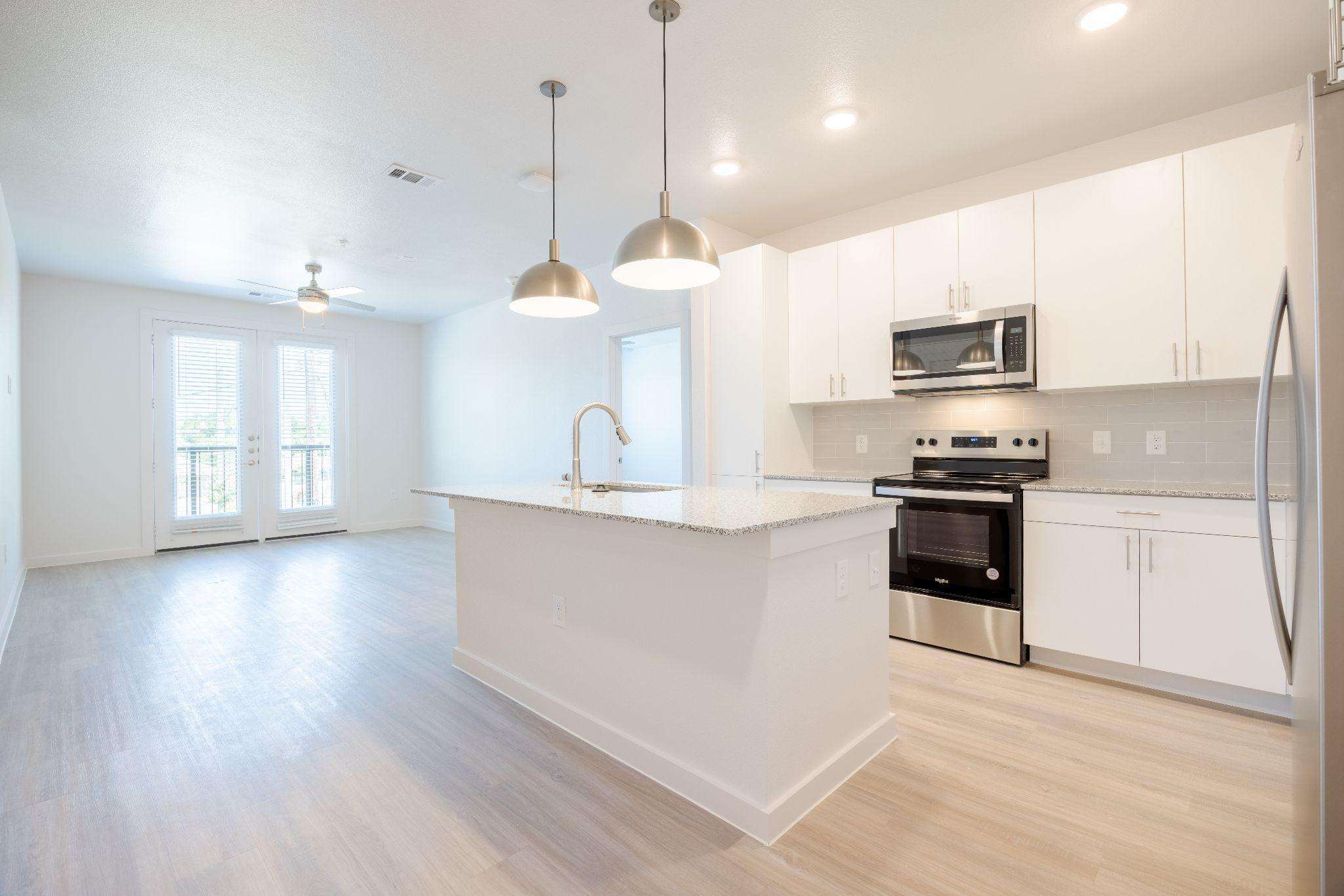
SOFI at 6311 is a 2025-built community in that pocket, with studio, one-, and two-bedroom floor plans and a South Austin location built around that access.
Your first 90 days: the checklist
Texas gives new residents a window to handle the official stuff. Don't let it slide:
- Driver's license — Texas generally requires new residents to get a Texas license within 90 days. Book a Texas DPS appointment early; slots fill up.
- Vehicle registration and inspection — register your vehicle with the county; Texas has its own process and timeline.
- Voter registration — update your registration once you've established residency.
- Utilities and internet — set up electricity, water, and internet before move-in day so you're not unpacking in the dark.
- Establish residency basics — update your address with banks, employers, and the USPS.
Knock these out in the first month and the rest of the transition gets a lot smoother.
Settle in and see the neighborhood
The East Coast-to-Austin move pays off most when you land somewhere with access, space, and a short trip back to the airport. Schedule a virtual tour at SOFI at 6311 and see how the South Austin location fits your first 90 days.
Frequently asked questions
Is moving to Austin from the East Coast worth it?
For many renters, yes. No state income tax, housing well below coastal-city costs, and a strong job market are the core draws. The main adjustments are car dependence and hot summers.
How much cheaper is Austin than New York or Chicago?
Significantly on housing. Austin's median rent fell below the U.S. median by early 2026, while a New York one-bedroom often exceeds $3,000. Combined with no state income tax, take-home and housing savings can be substantial — run current figures for your situation.
Do I need a car in Austin?
Almost certainly. Unlike NYC or Chicago, Austin is car-dependent with limited transit. Choose a location with multiple route options to manage traffic.
What's the weather like compared to the Northeast?
Summers are long and hot with heavy AC use; winters are mild with no snow. Spring and fall are excellent. Severe-weather awareness shifts from blizzards to thunderstorms and tornadoes.
What do I need to do in my first 90 days in Texas?
Get a Texas driver's license (generally required within 90 days), register and inspect your vehicle, update voter registration, set up utilities and internet, and change your address with banks and employers.
Why choose South Austin for an East Coast relocation?
It balances a short downtown commute, walkable neighborhood character, multiple route options, and airport access on the same side of the river — convenient for frequent East Coast flights.
The post Relocating to Austin from the East Coast: A Practical Guide to the First 90 Days appeared first on SOFI at 6311 Blog.
]]>The post Family Life in South Austin’s 78745: Parks, Schools, and the Neighborhood Feel appeared first on SOFI at 6311 Blog.
]]>TL;DR
- 78745 pairs quiet residential streets with green space, local retail, and an easy connection to the rest of Austin.
- Parks are the standout: Stephenson Nature Preserve, Garrison Park, Mary Moore Searight, and McKinney Falls State Park are all within reach.
- The neighborhood is served by Austin ISD; campuses are listed here by name and proximity only — confirm attendance zones with the district.
- Local anchors like the Poco Poco supermarket and the South 1st retail corridor keep everyday errands close.
- SOFI at 6311 sits inside this neighborhood. Schedule a tour.
South Austin's 78745 has shifted over the last five years from scattered industrial pockets into a dense, local neighborhood with green space, restaurants, and retail close at hand. For anyone weighing the area, here's a grounded look at the parks, schools, and everyday feel — described in terms of places and distances, not labels.
What the neighborhood feels like
78745 reads as residential and unhurried. Streets are quieter and traffic density is lower than the busier East Austin corridors, and the area sits just below Ben White Boulevard with quick reach to the South Congress, Manchaca, and South 1st corridors. Day-to-day life here leans local-routine: grocery runs, neighborhood parks, and nearby coffee and food rather than a constant destination-district buzz.
The five-year shift is real. What were once industrial strips have filled in with independent restaurants, cafés, and retail, giving the area more texture without losing its calm.
Green space and parks
This is where 78745 stands out. A cluster of parks and preserves sits within easy reach:
- Stephenson Nature Preserve — wooded trails on dirt and rock paths off Longview Road, managed by the City of Austin Parks and Recreation Department. Good for a quiet walk.
- Garrison Park — a neighborhood park with open space and walking paths, close to the South 1st corridor.
- Mary Moore Searight Metropolitan Park — a large park off Slaughter Lane with six miles of trails, a disc golf course, sports courts, a fishing pier, and an off-leash dog area.
- McKinney Falls State Park — a 744-acre Texas Parks and Wildlife state park at the confluence of Onion and Williamson Creeks, with limestone falls, paved and unpaved trails, and camping. The National Park Service notes it sits about 13 miles southeast of downtown by road.
Add the Williamson Creek greenbelt and Lady Bird Lake to the north, and outdoor access is one of the area's strongest practical features.
Schools in the area
78745 is served by the Austin Independent School District. Nearby campuses include Crockett High School (at Menchaca Road and Stassney Lane) along with various AISD elementary and middle schools serving the surrounding neighborhoods.
A note on accuracy: attendance boundaries change, and proximity to a campus does not guarantee enrollment there. Use the Austin ISD school finder to confirm the exact zoned schools for any specific address before you decide.
Everyday errands and local anchors
The practical stuff is close. The South 1st corridor and surrounding area cover groceries, dining, and daily needs:
- Poco Poco supermarket — a local grocery anchor in the neighborhood, handy for everyday shopping.
- H-E-B and Sprouts — full-service grocery options a short drive away.
- South 1st retail corridor — independent restaurants, cafés, and shops within minutes.
Having groceries, green space, and food this close is a big part of what makes the area workable for daily life.
Getting around
Location is part of the appeal. Downtown Austin is about 12 minutes from the South 1st corridor outside of traffic, and South Austin sits on the same side of the river as Austin-Bergstrom International Airport, so airport trips skip the river crossing and the downtown core. The area also has route redundancy — South 1st, South Congress, South Lamar, Ben White, and I-35 — so a single backed-up road doesn't define your day.
How SOFI at 6311 fits the neighborhood
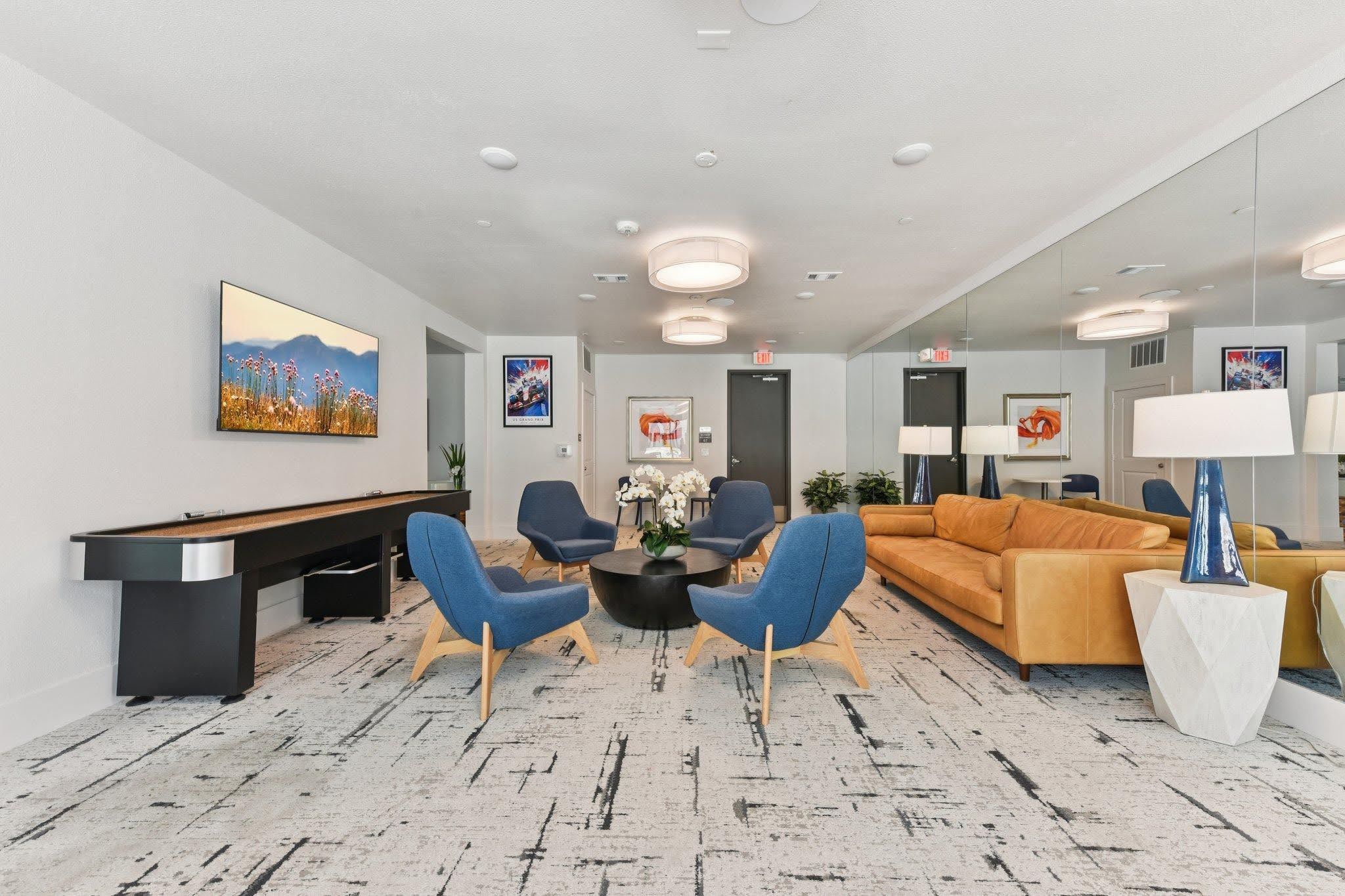
SOFI at 6311 is a 2025-built community on the South 1st corridor, set inside this stretch of 78745 — close to the parks above, the local grocery and retail anchors, and the routes that connect the rest of Austin.
See the studio, one-, and two-bedroom floor plans, browse the photo gallery, and check the neighborhood and directions to get a feel for where it sits.
Frequently asked questions
What parks are near South Austin's 78745?
Stephenson Nature Preserve and Garrison Park are close to the South 1st corridor, Mary Moore Searight Metropolitan Park is a short drive south with trails and an off-leash dog area, and McKinney Falls State Park is about 13 miles southeast of downtown.
What school district serves 78745?
The Austin Independent School District serves 78745. Nearby campuses include Crockett High School and various AISD elementary and middle schools. Attendance zones change, so confirm the zoned schools for a specific address using the Austin ISD school finder.
How far is 78745 from downtown Austin?
About 12 minutes from the South 1st corridor outside of traffic, with several route options including South 1st, South Congress, South Lamar, Ben White, and I-35.
Where can I buy groceries in 78745?
The Poco Poco supermarket is a local neighborhood anchor, and H-E-B and Sprouts are a short drive away for full-service grocery shopping.
What's the neighborhood feel of 78745?
Residential and quiet, with lower traffic density than the busier East Austin corridors. Over the last five years it has added independent restaurants, cafés, and retail while keeping a calm, local-routine character.
Is SOFI at 6311 close to parks and everyday essentials?
Yes. SOFI at 6311 sits on the South 1st corridor in 78745, within reach of the area's parks, local grocery and retail anchors, and the main routes connecting the rest of Austin.
See the neighborhood in person
The best way to understand a neighborhood is to walk it — the parks, the corridor, the everyday spots. Schedule a tour at SOFI at 6311 and see how 78745 fits your life.
The post Family Life in South Austin’s 78745: Parks, Schools, and the Neighborhood Feel appeared first on SOFI at 6311 Blog.
]]>The post New Construction Apartments in Austin: Is It Worth It? appeared first on SOFI at 6311 Blog.
]]>TL;DR
- "New construction" isn't just marketing — it usually means in-unit washer/dryer, smart-home features, attached or covered parking, and modern amenities that older stock often lacks.
- The bigger hidden win is maintenance: a new build means no deferred repairs, aging HVAC, or year-one water-heater surprises.
- The real comparison is total cost — rent plus renter's insurance, utility differences, and parking — not just the sticker rent.
- Austin's apartment oversupply means new Class A communities are unusually competitive on price right now.
- SOFI at 6311 was built in 2025. View floor plans and see current availability.
When you're comparing apartments in Austin, "new construction" gets thrown around a lot. It's worth knowing what the phrase actually buys you — and what you quietly give up by choosing an older building to save a little on rent.
Here's an honest comparison, without the marketing gloss.
What "new construction" actually means for a renter
Strip away the brochure language and new construction comes down to a few concrete things:
- In-unit laundry — a full-size washer and dryer in the apartment, not a shared laundry room down the hall.
- Smart-home features — keyless entry, smart thermostats, and app-based controls built in rather than added on.
- Modern parking — attached or covered parking designed into the building, not a gravel lot.
- Current amenities — fitness centers, resort-style pools, and resident lounges built to today's standards.
These aren't luxuries so much as the current baseline for Class A product. The gap shows up when you tour an older building and notice what isn't there.
What older South Austin stock typically doesn't include
This isn't a knock on older buildings — many have character and lower rents. But an honest list of what they often lack:
- In-unit washer/dryer — frequently a shared facility or hookups only.
- Smart-home integration — usually absent in buildings from the 1970s–1990s.
- Attached/covered parking — often surface lots without cover.
- Modern amenity packages — pools and fitness spaces, when present, are often dated.
For some renters none of that matters. For others — especially anyone working from home or valuing convenience — it adds up fast.
The maintenance reality nobody mentions
Here's the under-discussed advantage of a new build: in year one, things just work.
Older buildings carry deferred maintenance. Aging HVAC systems strain through Austin summers. Water heaters fail. Plumbing surprises show up. A 2025-built community hasn't accumulated any of that — the systems are new, under warranty, and not yet on anyone's repair list.
That translates to fewer disruptions, fewer maintenance tickets, and more reliable comfort through your first lease — which matters a lot during a Texas August.
Is the premium worth it? Run the total cost
New construction sometimes carries a higher sticker rent, but the right comparison is total monthly cost, not the headline number. Factor in:
- Utilities — newer builds with better insulation and efficient HVAC often cost less to heat and cool. ENERGY STAR's residential new construction program sets efficiency standards well above code-built homes.
- Renter's insurance — typically modest, but compare.
- Parking — a covered space included in a new build can beat paying extra at an older property.
- Concessions — this is the timing piece. Austin is in an oversupply window after the 2023–2025 delivery wave, and a Dallas Fed study confirms landlords are competing hard on price. New Class A communities are unusually affordable on a net-effective basis right now.
When you run the full math, the premium for new construction is often smaller than it looks — and sometimes disappears entirely.
SOFI at 6311: built in 2025
SOFI at 6311 is a Class A community built in 2025 on the South 1st corridor in South Austin. That means current-spec construction, new systems, and a modern resident experience — without the deferred-maintenance baggage of older stock.
See the studio, one-, and two-bedroom floor plans, browse the community amenities, and check the photo gallery to see the finishes for yourself. Refer to the website for current availability and pricing.
Frequently asked questions
What counts as a "new construction" apartment in Austin?
Generally a community built within the last few years to current Class A standards — think in-unit laundry, smart-home features, modern amenities, and attached or covered parking. SOFI at 6311 was built in 2025.
Is new construction worth the higher rent?
Often, once you compare total cost. Newer builds tend to have lower utility costs, included covered parking, and — right now in Austin — strong concessions that narrow or erase the premium versus older stock.
What do older South Austin apartments usually lack?
Commonly in-unit washer/dryer, smart-home integration, attached/covered parking, and modern amenity packages. Many older buildings have hookups or shared laundry instead of in-unit machines.
Do new apartments have lower maintenance issues?
Generally, yes in the early years. New systems mean no deferred maintenance, no aging HVAC, and fewer first-year breakdowns — a real advantage through Austin summers.
Why are new Austin apartments so competitively priced right now?
Austin absorbed a large wave of new construction between 2023 and 2025, creating an oversupply. A Dallas Fed study found landlords are competing on rent and concessions, making new Class A communities unusually affordable on a net-effective basis.
Does SOFI at 6311 have in-unit laundry and modern amenities?
SOFI at 6311 is a 2025-built Class A community. Check the amenities page and floor plans on the website for the current, confirmed feature list before you decide.
See new construction for yourself
The difference between a 2025 build and older stock is easy to feel the moment you walk in. View floor plans at SOFI at 6311 and see current availability.
The post New Construction Apartments in Austin: Is It Worth It? appeared first on SOFI at 6311 Blog.
]]>The post Austin Rent Trends Fall 2026: Where Prices Are Heading appeared first on SOFI at 6311 Blog.
]]>TL;DR
- Austin rents are down and renters have leverage — the metro saw the steepest rent decline of any large U.S. city from 2021–2026.
- The cause is a historic supply wave, not collapsing demand — Austin's population kept growing through the drop.
- Don't read the metro number as the 78745 number: South Austin has been a more resilient pocket.
- Fall is historically a softer renting season, which adds to your negotiating room.
- SOFI at 6311 is a 2025-built South Austin community. See current availability.
Austin rents are falling, and they have been for nearly two years. As of early 2026, the metro's median rent sat below the national average after one of the steepest multi-year declines of any large U.S. city — driven by a record wave of new apartment construction, not weak demand. For renters, that means real negotiating power heading into fall 2026. But the metro-wide number hides an important split: resilient submarkets like South Austin's 78745 have held up far better than the citywide average suggests. Here's what's actually happening, and what it means for your next lease.
Are Austin rents going up or down in fall 2026?
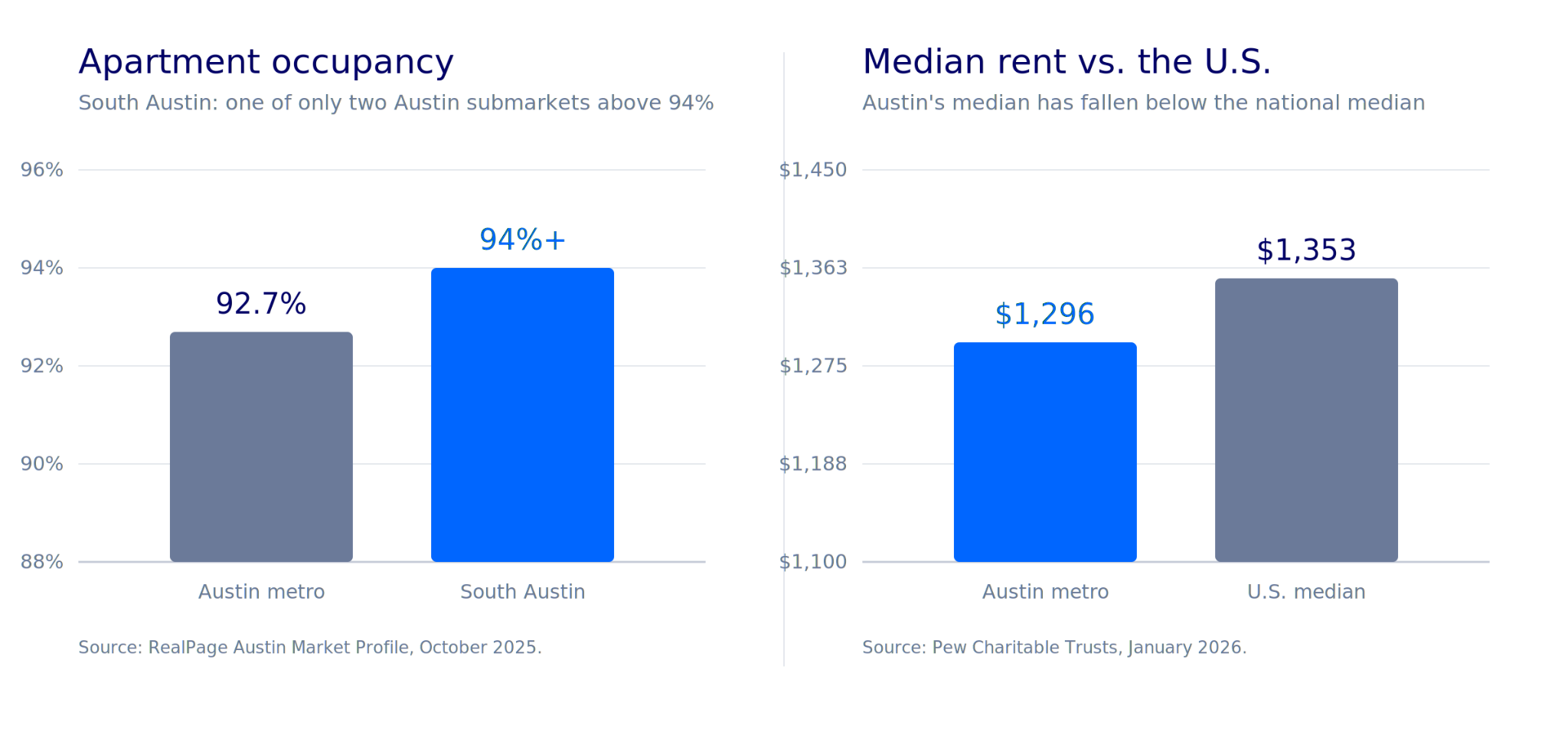
Down. Austin's rents have declined for nearly two years and remain soft heading into fall 2026. Realtor.com data reported by KUT put the metro's median asking rent at about $1,357 as of February 2026 — down more than 7% year-over-year and roughly $300 below the September 2022 peak. The Pew Charitable Trusts put the January 2026 median around $1,296, below the U.S. median.
The driver is supply: Austin delivered a record wave of new apartments, pushing vacancy up and rents down even as the population grew. This is a supply correction, not a demand collapse.
Which Austin neighborhoods have the most competitive rent right now?
The deepest discounts cluster where the most new supply landed and in older Class C buildings. Pew found rents in older non-luxury (Class C) buildings fell about 11%, the steepest cuts in the market. New Class A communities, meanwhile, compete with concessions rather than deep base-rent cuts.
Here's the metro-versus-submarket picture:
| Market | Approx. median rent (early 2026) | YoY trend | Source |
|---|---|---|---|
| Austin metro (all unit types) | ~$1,296–$1,357 | Down ~7% YoY | Pew; Realtor.com via KUT |
| U.S. median (reference) | ~$1,353 | Roughly flat | Pew |
| Class C (older, metro) | — | Down ~11% | Pew |
| South Austin 78745 (1-bedroom) | ~$1,356 | Down YoY | RentHop (May 2026) |
| South Austin (occupancy) | Above 94% (Oct 2025) | One of only two Austin submarkets above 94% | RealPage |
The occupancy gap is the clearest proof: as of October 2025, RealPage reported South Austin held above 94% occupancy — one of only two Austin submarkets to do so — while the metro overall sat at 92.7%. South Austin also saw fewer new deliveries than the heavy-supply corridors, which is a big part of why it held up. Unit-level 78745 figures move with current listings, so pull the latest from a named source before citing a specific number.
Is South Austin more affordable than North Austin?
It depends what you're optimizing for. The deepest concessions right now sit in the heavy-supply north corridors — Domain-area communities have advertised 8–10 weeks free to fill units. But “most concessions” isn't the same as “best value.” South Austin offers commute access, airport proximity on the same side of the river, and a more resilient rent base, which is why the 78745 submarket has held up better than the metro headline.
The key point: don't read the metro-wide decline as the South Austin number. The citywide narrative gives underperforming properties cover; 78745 has been the more stable pocket — RealPage data shows South Austin among the few submarkets that held above 94% occupancy while the metro slipped to 92.7%.
Is fall a good time to rent an apartment in Austin?
Generally, yes — and 2026 amplifies it. Fall is historically a softer leasing season after the summer rush, so leasing offices have more empty units to fill and more reason to deal. Layer that on top of the current oversupply and renters have unusual leverage: concessions, waived fees, and flexibility on terms. If you're shopping this fall, calculate net-effective rent (base rent minus free months spread across the lease) before comparing options.
How does the Austin rental market compare to the national average?
Austin now sits below the national median. Pew reported Austin's January 2026 median rent at roughly $1,296 versus a U.S. median around $1,353 — a notable flip for a city that, in late 2021, was running about 15% above the national median. In other words, Austin went from meaningfully more expensive than the typical U.S. metro to slightly cheaper, in the span of a few years.
The Buda/Kyle signal
One more data point that reframes South Austin's value: communities 15–20 minutes south in Buda and Kyle are now priced where parts of South Austin sat a few years ago. That compression means staying in a well-located South Austin ZIP no longer carries the premium it once did over the far-south suburbs — you can be closer in without paying far more.
What it means for your next lease
If you're renting in Austin this fall, the market is on your side — but read it correctly:
- Negotiate. Ask for concessions and compare on net-effective rent, not sticker rent.
- Don't overweight the metro headline. A resilient submarket like 78745 won't show the same fire-sale pricing as the most oversupplied corridors, and that stability is a feature, not a markup.
- Move while leverage lasts. Analysts expect the market to tighten back toward balance as construction slows, so the renter-favorable window has a shelf life.
SOFI at 6311 is a 2025-built Class A community in the 78745 submarket, with studio, one-, and two-bedroom floor plans. See current availability and check the neighborhood before you decide.
Frequently asked questions
Are Austin rents going up or down in fall 2026?
Down. Austin rents have fallen for nearly two years; the metro median was around $1,296–$1,357 in early 2026, down roughly 7% year-over-year and well below the 2022 peak, driven by a record supply of new apartments.
Why are Austin rents falling?
A historic wave of new apartment construction pushed vacancy up and rents down. It's a supply correction — Austin's population kept growing through the decline, so it's not a demand collapse.
Is South Austin's 78745 as cheap as the metro average suggests?
Not exactly. The metro-wide decline is steepest in heavy-supply corridors and older Class C buildings. South Austin's 78745 has been a more resilient submarket, so it doesn't show the same deep discounts — that stability is part of its value.
Is fall a good time to rent in Austin?
Yes. Fall is historically a softer leasing season, and combined with current oversupply, renters have strong leverage on concessions and terms. Compare net-effective rent before signing.
How does Austin rent compare to the national average?
Austin's median rent (around $1,296 in January 2026) is now below the U.S. median (around $1,353) — a flip from late 2021, when Austin ran roughly 15% above the national median.
What is net-effective rent and why does it matter now?
Net-effective rent is your true monthly cost after spreading any free months across the lease term. With concessions widespread in Austin this fall, comparing net-effective rent — not sticker rent — is the only accurate way to compare options.
Should I rent in South Austin or the northern suburbs for the best deal?
The deepest concessions are in the heavy-supply north, but South Austin offers commute access, airport proximity, and a more stable rent base. The best “deal” depends on whether you're optimizing for raw concession size or location and stability.
The post Austin Rent Trends Fall 2026: Where Prices Are Heading appeared first on SOFI at 6311 Blog.
]]>The post South Austin’s Hidden Airport Advantage Near AUS appeared first on SOFI at 6311 Blog.
]]>TL;DR
- Austin-Bergstrom (AUS) sits on the south side of the river — so South Austin residents skip both the river crossing and the downtown core on the way to the gate.
- For frequent flyers, which side of the river you live on can matter more than raw distance.
- The decade-long I-35 rebuild compounds the problem for north-side travelers heading to AUS.
- "Close to the airport, not under it" — South Austin gets you a short drive without sitting beneath the flight paths.
- SOFI at 6311 is a short, toll-free drive from AUS. Schedule a virtual tour.
If you fly often, the smartest apartment-hunting question in Austin isn't "how far is the airport?" It's "what's between me and the airport?" Austin's geography turns that into a real difference — and South Austin comes out ahead.
Here's why the south side has a quiet edge for travelers, and how to think about proximity versus noise.
Austin's airport lottery: geography beats mileage
Austin-Bergstrom International Airport is one of the most conveniently located major airports in the country, about 7.5 miles and roughly 15 minutes from downtown. But that downtown number hides the catch: AUS sits on the south side of the river.
For anyone north of the river, getting there means crossing the water and threading the central traffic knot. For South Austin residents, that crossing simply isn't part of the trip. Same airport, very different drive — and the difference is geography, not miles.
The drive from the south side
From the South 1st corridor, AUS is a short, toll-free drive, mostly via Ben White Boulevard (which becomes Highway 71 heading east to the airport). You're approaching from the same side of the river the airport is on, so you skip the downtown bottleneck entirely.
That's the practical version of "convenient airport access" — not a number on a listing, but a route with fewer things that can go wrong on a 6 a.m. departure.
The I-35 problem for north-side flyers
This advantage is about to widen. The I-35 Capital Express Central project — a TxDOT reconstruction of the central corridor that broke ground in late 2024 and runs through 2033 — is removing the upper decks and lowering the main lanes through downtown.
For north-side residents who already cross the river and the central core to reach AUS, that's roughly a decade of added friction on a route they take regularly. South Austin travelers, approaching from the same side as the airport, largely sidestep it.
"Close to the airport, not under it"
Proximity is good. Sitting directly beneath the arrival and departure paths is not. Areas immediately adjacent to AUS trade their convenience for the noise that comes with being right under the flight lines — and with AUS serving 21+ million annual passengers and expanding, those flight paths aren't shrinking.
South Austin threads that needle. From the South 1st corridor you're close enough for a short drive but far enough out that your evenings stay quiet. You get the convenience of the south side without living under the approach.
This is a lifestyle distinction — quiet at home versus noise at home — not a technical claim about flight contours or property values. The point is simple: you can be near the airport without hearing it.
Why this matters over a full lease
For a frequent traveler, airport friction is a weekly tax. A route that crosses the river and the central construction zone costs you time and predictability every single trip. A route that stays on the airport's side of the river — and avoids the I-35 rebuild — gives those minutes back.
Over a 12-month lease, that adds up to real hours, and a lot less stress on early-morning departures.
Where SOFI at 6311 fits
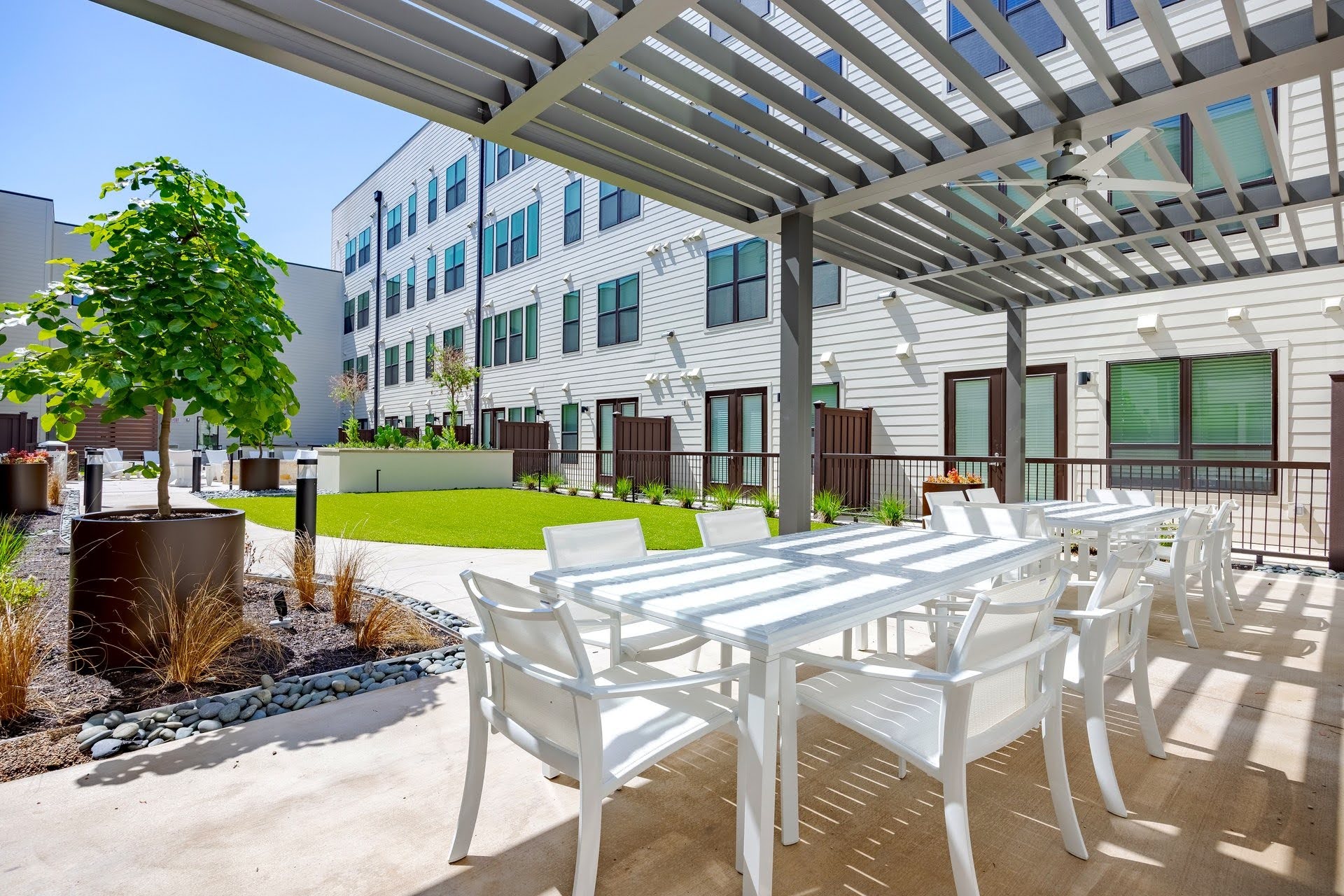
SOFI at 6311 is a 2025-built South Austin community positioned for exactly this: a short, toll-free drive to AUS on the same side of the river, away from the central I-35 work, and far enough from the airport to keep nights quiet.
See the studio, one-, and two-bedroom floor plans, check the South Austin neighborhood and directions, or take a virtual tour if you're booking from out of town.
Frequently asked questions
How far is South Austin from Austin-Bergstrom Airport?
AUS is about 7.5 miles and roughly 15 minutes from downtown, and it sits on the south side of the river. From the South 1st corridor it's a short, toll-free drive, mostly via Ben White Boulevard and Highway 71 — without crossing the river or downtown. Check current drive time on a map for your exact address.
Why is South Austin better than North Austin for airport access?
Austin-Bergstrom is on the south side of the river. South Austin residents reach it without crossing the river or the central I-35 corridor, while north-side travelers face both — a gap that widens during the multi-year I-35 reconstruction.
Will the I-35 construction affect getting to the airport?
For north-side residents, yes — the I-35 Capital Express Central project runs through 2033 and reshapes the central corridor that many use to reach AUS. South Austin travelers approaching from the same side as the airport largely avoid it.
Are South Austin apartments under the flight path?
The South 1st corridor is close to AUS but not directly beneath the main arrival and departure paths the way some immediately airport-adjacent areas are. You get a short drive without the constant overhead noise.
Is AUS a growing airport?
Yes. Austin-Bergstrom serves over 200 daily flights and 75-plus nonstop destinations and continues to expand, which is part of why "close but not under it" is the sweet spot for frequent flyers.
How far is SOFI at 6311 from the airport?
A short, toll-free drive from the South 1st corridor, on the same side of the river as AUS. Confirm the exact current drive time on a mapping app for your travel times.
See it before your next trip
If you fly often, the side of the river you live on quietly shapes every airport run. Schedule a virtual tour at SOFI at 6311 and map the drive to AUS for yourself.
The post South Austin’s Hidden Airport Advantage Near AUS appeared first on SOFI at 6311 Blog.
]]>The post South Austin Move-In Guide Near SOFI at 6311 appeared first on SOFI at 6311 Blog.
]]>TL;DR
- Everything a new resident needs is close to 6311 South 1st — groceries, furniture and home goods, restaurants, coffee, dessert, and a strong local bar-and-brewery scene.
- Grocery runs are easy: H-E-B and Sprouts are both minutes away.
- Furnishing a new place? HomeGoods and Homesense are right down the road in the Sunset Valley area, with IKEA design services and South Congress furniture shops nearby.
- Food and coffee are largely walkable or a short drive, from a taqueria next door to local roasters and craft breweries.
- SOFI at 6311 sits in the middle of it. Schedule a tour to see the neighborhood.
Moving into a new apartment comes with a checklist: stock the fridge, furnish the rooms, and figure out where you'll actually spend your time. The good news for anyone settling in near 6311 South 1st Street is that all of it is close.
Here's a practical, category-by-category guide to setting up your life in South Austin — groceries and home goods first, then the food, coffee, dessert, and nightlife that make a neighborhood feel like home.
Setting up your home: groceries and household basics
Start with the essentials. The South 1st corridor puts everyday shopping within a quick trip.
Groceries
- H-E-B — Texas's beloved grocery chain, with locations convenient to South Austin for full weekly shopping.
- Sprouts Farmers Market — a smaller-format option leaning into fresh produce, natural foods, and bulk goods.
Both are close enough that a grocery run doesn't eat your evening. For a quick reference on what's nearby, the SOFI at 6311 neighborhood page maps the surrounding area.
Furnishing your apartment: home goods and furniture
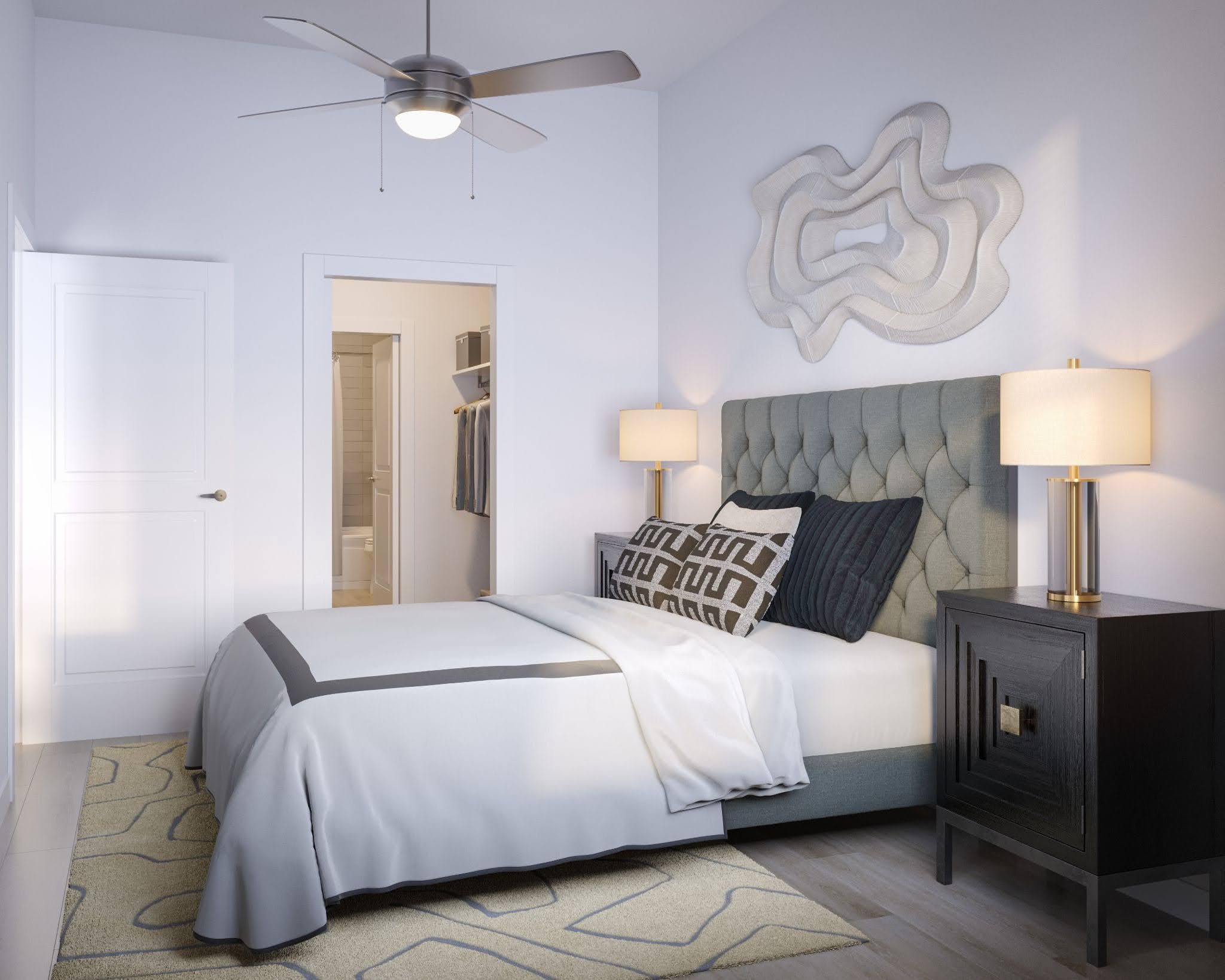
A new apartment means filling rooms. South Austin makes that surprisingly easy across budgets:
- HomeGoods (78745) — ever-changing furniture, decor, kitchen, and bath finds at value prices. Good for the small stuff that makes a place livable.
- Homesense — at Sunset Valley Marketfair (5400 Brodie Lane), a larger-format sister store to HomeGoods with furniture, rugs, lighting, and decor.
- IKEA at Best Buy – South Austin — a plan-and-order point where you can design and order IKEA furniture for direct delivery, without the trek to the full-size Round Rock store.
- South Congress furniture shops — a stretch of modern furniture and home decor showrooms a short drive north on SoCo, if you want statement pieces.
Between the value stores and the design help, you can furnish a studio, one-, or two-bedroom without leaving the south side.
Where to eat: restaurants near 6311 South 1st
South Austin's food scene is local, varied, and close. A few starting points:
- La Playa Taqueria & Mariscos — practically next door at 6400 S 1st, this mom-and-pop taqueria is a neighborhood favorite for Mexican food, seafood, breakfast, and micheladas, open daily.
- Artipasta — a local Italian spot for handmade pasta when you want something heartier.
- Aviator Pizza & Drafthouse — pizza and drafts, an easy weeknight option.
That's before you get into the taco trucks, cafés, and chef-driven spots scattered along the South 1st and South Congress corridors. The variety is the point — you won't run out of new places.
Coffee: the local-first scene
South Austin coffee skews independent and unhurried — neighborhood living rooms with patios, not drive-through chains.
- Radio Coffee & Beer (4204 Manchaca Rd) — a longtime fixture and repeatedly voted Austin's best coffee shop, with a big dog-friendly patio, rotating food trucks, and events.
- Summer Moon Coffee (South 1st) — known for its distinctive oak-roasted coffee and sweet-cream Moon Milk, a reliable work-and-meet spot.
Both become weekly habits fast — which is exactly what you want five minutes from home.
Dessert: ice cream and sweets
For when you need something sweet:
- Lick Honest Ice Creams (1100 S Lamar) — small-batch, seasonal artisan ice cream made with local ingredients, including dairy-free options.
- Dolce Neve (1713 S 1st) — award-winning gelato made by formally trained gelato makers, with rotating flavors.
Both are local, high-quality, and a short hop from the neighborhood.
Going out: bars and breweries
South Austin has a deep craft-beer and bar scene clustered just east across the highway, much of it within a short drive:
- St. Elmo Brewing Co. — a relaxed, family- and dog-friendly brewery with a beer garden, live music, and food trucks on-site.
- Vacancy Brewing — award-winning lagers and small-batch beers with trivia and live events.
- South Austin Brewing Co. — a homegrown microbrewery pouring beer, wine, cider, and non-alcoholic options with a food trailer on-site.
This pocket of breweries, food trucks, and taprooms is one of the south side's best weekend draws — close enough to be your regular spot, not a special-occasion trek.
Why proximity is the real amenity
When you're choosing where to live, it's easy to focus on the apartment itself — the finishes, the floor plan, the rent. But the thing that actually shapes your day is what's within a few minutes of your door.
Near 6311 South 1st, that radius covers groceries, furniture, food, coffee, dessert, and nightlife. You can move in, furnish the place, stock the kitchen, and find your regular spots without ever pointing the car toward downtown.
SOFI at 6311 is a 2025-built community right in the middle of it, with studio, one-, and two-bedroom floor plans and a photo gallery so you can see the community before you visit.
Frequently asked questions
What grocery stores are near SOFI at 6311?
H-E-B and Sprouts Farmers Market are both convenient to the South 1st corridor, covering full weekly shopping and fresh/natural-foods needs within a short drive.
Where can I buy furniture near South Austin?
HomeGoods (78745) and Homesense at Sunset Valley Marketfair cover value furniture and decor, IKEA at Best Buy South Austin offers design-and-order services with home delivery, and South Congress has modern furniture showrooms a short drive away.
What restaurants are within walking distance of 6311 South 1st?
La Playa Taqueria & Mariscos sits right next door at 6400 S 1st, and the broader South 1st and South Congress corridors add Italian, pizza, taco trucks, and cafés within a short trip.
Where's the best coffee in South Austin?
Radio Coffee & Beer on Manchaca and Summer Moon on South 1st are two local heavyweights — independent, patio-friendly, and easy daily stops near the neighborhood.
Where can I get ice cream or dessert nearby?
Lick Honest Ice Creams on South Lamar serves small-batch seasonal ice cream, and Dolce Neve on South 1st makes award-winning gelato — both a short drive from the community.
Are there breweries near SOFI at 6311?
Yes. St. Elmo Brewing Co., Vacancy Brewing, and South Austin Brewing Co. anchor a cluster of breweries, taprooms, and food trucks a short drive east, making for an easy local night out.
Is SOFI at 6311 close to everyday essentials?
Yes. Groceries, home goods, restaurants, coffee, dessert, and nightlife are all within a few minutes of 6311 South 1st Street, which is a big part of the neighborhood's appeal for new residents.
Settle in and see for yourself
The best way to judge a neighborhood is to stand in it. Schedule a tour at SOFI at 6311 and check out the spots that would become part of your everyday routine.
The post South Austin Move-In Guide Near SOFI at 6311 appeared first on SOFI at 6311 Blog.
]]>The post North Austin vs. South Austin: Which Saves You Time? appeared first on SOFI at 6311 Blog.
]]>TL;DR
- Austin's geography is defined by one river and one interstate with limited crossings — so miles don't equal minutes here.
- North Austin has real draws: Domain retail, tech campuses, newer development. But airport trips and downtown access mean crossing the river and the central core.
- The I-35 Capital Express Central rebuild — upper decks coming down, full corridor work through 2033 per TxDOT — falls hardest on north-side commuters.
- South Austin's street-grid redundancy (South 1st, South Congress, South Lamar, Ben White, I-35) gives you many ways in and out.
- SOFI at 6311 sits south and west of the construction zone. Schedule a tour.
"North or south?" is the first question most people face when apartment-hunting in Austin. The honest answer depends on where you actually go day to day — but the city's geography stacks the deck in ways that aren't obvious from a map. Here's how the two sides really compare on the thing that shapes your week most: time.
Austin's structural reality: miles don't equal minutes
Austin is split by the Colorado River (Lady Bird Lake through the center) and threaded by I-35, the main north-south spine. There are only so many crossings, and they funnel an enormous amount of traffic.
That's why distance is misleading here. A place that looks "close" on a map can be a long trip if it sits on the wrong side of a crossing. When you're comparing north and south, the real question isn't how many miles — it's how many choke points you have to clear to get where you're going.
What North Austin gets right
North Austin has genuine appeal, and it's worth saying plainly:
- The Domain — a walkable retail, dining, and entertainment hub that functions like a second downtown.
- Tech campuses — major employers cluster in the northern corridors, which shortens commutes for people who work there.
- Newer development — a lot of recent construction means modern product and amenities.
If you work in the north tech corridor and spend your time around the Domain, north Austin can be the right call. The trade-offs show up when your life pulls you toward the central city or the airport.
The hidden cost: getting south from the north
Everything south of the river — downtown's core, South Congress, the airport — requires north-side residents to cross both the river and the central traffic knot. That's where the time disappears.
And it's about to get harder. The I-35 Capital Express Central project is a multibillion-dollar TxDOT reconstruction of the central I-35 corridor that broke ground in late 2024 and is scheduled to run through 2033. It's removing the upper decks between Airport Blvd and Lady Bird Lake and lowering the main lanes through downtown — work that will reshape north-south travel for roughly a decade. North-side residents who routinely cross that stretch bear the brunt of it.
SOFI at 6311 sits south and west of the worst of that corridor work, which matters over a multi-year lease.
What the deep-north concession numbers are signaling
Here's a market signal worth reading. Communities in the Domain area have been advertising aggressive concessions — 8 to 10 weeks of free rent on a 12-month lease as of early 2026. That's not generosity; it's supply. A Federal Reserve Bank of Dallas study found Texas's pandemic-era construction boom left a lingering apartment oversupply, with landlords leaning on six-to-eight-week (and sometimes three-month) concessions to fill units. When a corridor has to give away that much rent to stay occupied, it's telling you demand isn't keeping pace with supply there. Read the concession as a signal, not just a deal.
South Austin's quiet advantage: redundancy
The thing South Austin does better than almost anywhere is give you options. From the South 1st corridor, you have South 1st, South Congress, South Lamar, Ben White, and I-35 all feeding where you need to go. When one backs up, you reroute.
Compare that with a single-corridor suburb where one slow road defines your entire morning. Redundancy is the unglamorous feature that actually protects your time — and South Austin has it.
South Austin also sits on the same side of the river as Austin-Bergstrom International Airport, so airport trips skip the river crossing and the downtown core entirely. Downtown itself is about 12 minutes from the South 1st corridor outside of traffic.
Where SOFI at 6311 lands
For a renter weighing north versus south, the SOFI at 6311 case is straightforward: South Austin access, multiple routes, airport on the same side of the river, and a position south and west of the decade-long I-35 rebuild — in a 2025-built Class A community.
Take a look at the studio, one-, and two-bedroom floor plans and the South Austin neighborhood to see how the access shakes out for your routine.
Frequently asked questions
Is North or South Austin better for commuting?
It depends where you go. North Austin is strong if you work in the northern tech corridors and stay near the Domain. South Austin wins for downtown and airport access because it avoids crossing the river and the central I-35 knot, and it offers multiple parallel routes.
How will the I-35 construction affect Austin commutes?
The I-35 Capital Express Central project runs through 2033 and reconstructs the central corridor, including removing the upper decks and lowering the main lanes downtown. North-south trips through the central stretch will be disrupted for years, hitting north-side commuters hardest.
Why are North Austin apartments offering so much free rent?
Largely oversupply. A Dallas Fed study found Texas's construction boom created a lingering glut, and Domain-area communities have advertised 8–10 weeks free to fill units. Heavy concessions signal that supply is outpacing demand in that corridor.
How far is South Austin from downtown?
About 12 minutes from the South 1st corridor outside of traffic, with several route options rather than one choke point.
Is South Austin closer to the airport than North Austin?
Generally, yes, in practical terms. Austin-Bergstrom sits on the south side of the river, so South Austin residents reach it without crossing the river or downtown — a meaningful time saver versus the north side.
Where does SOFI at 6311 sit relative to the I-35 work?
South and west of the most disruptive central-corridor construction, in South Austin's 78745 area, with multiple routes to downtown and the airport.
See the access for yourself
The north-versus-south question comes down to how many choke points stand between you and where you actually go. Schedule a tour at SOFI at 6311 and check the routes that matter to your week.
The post North Austin vs. South Austin: Which Saves You Time? appeared first on SOFI at 6311 Blog.
]]>The post Studio vs One-Bedroom: Choosing Your Austin Apartment appeared first on SOFI at 6311 Blog.
]]>TL;DR
- A studio puts your whole life in one room; a one-bedroom adds a door, a separate sleep space, and more storage — usually for a few hundred dollars more per month.
- Studios average around 500 square feet; one-bedrooms average about 735 square feet nationally.
- Choose a studio if you're solo, rarely home, and budget-first. Choose a one-bedroom if you work from home, have a partner or pet, or need storage.
- The real cost gap is bigger than rent alone — factor in utilities, parking, and pet fees.
- SOFI at 6311 offers both. View floor plans to compare layouts side by side.
Picking between a studio and a one-bedroom is the first real decision most Austin renters face — and it feels harder than it should. The square footage is close. The rent is sometimes close. So what actually separates them?
It comes down to how you live, not just what you can afford. Here's how to decide.
Why the choice feels harder than it is
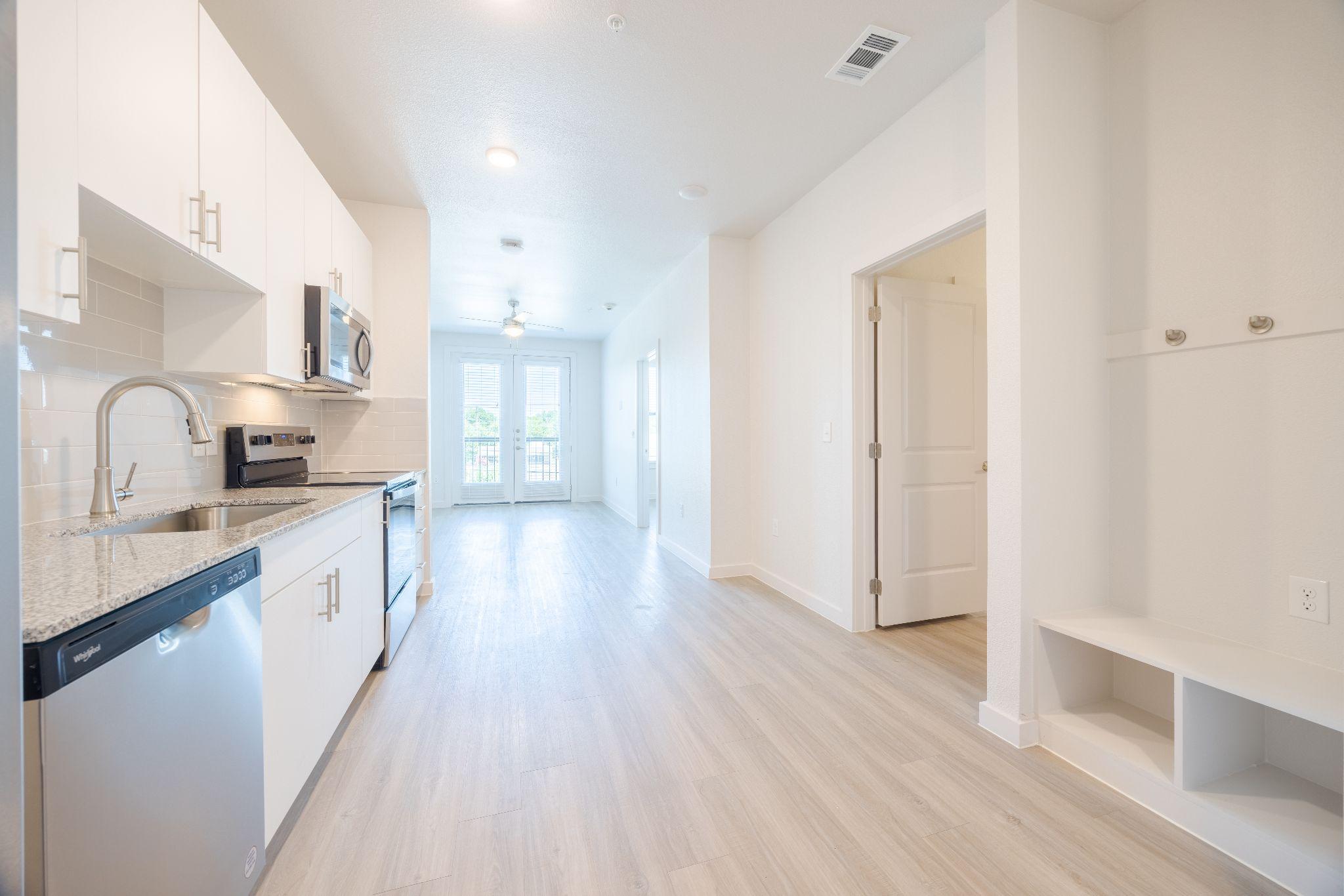
On paper, a studio and a small one-bedroom can look almost identical: similar total square footage, similar rent. The difference isn't the size of the box — it's how the box is divided.
A studio is one open room. A one-bedroom puts a wall and a door between where you sleep and where you live. That single distinction changes your daily routine more than any number on a floor plan, which is why the decision deserves more than a quick price comparison.
When a studio is the right move
A studio works best when your apartment is mostly a place to sleep and reset, not a place where your whole life happens. Good fits:
- You're solo and value simplicity over separation.
- You're rarely home — long work hours, an active social life, or a lot of travel.
- Budget is the priority. Studios are typically the cheapest entry point in a given building, and smaller square footage means lower heating, cooling, and electricity costs.
The trade-off: less privacy, less storage, and tighter limits when you have guests. If your bed doubles as your couch, that's the studio life.
When a one-bedroom earns its premium
A one-bedroom is worth the extra rent when you actually use the separation. Good fits:
- You work from home. A door you can close is the difference between focus and chaos.
- You live with a partner. Separate spaces for rest and activity keep a small home livable.
- You have a pet or need storage. One-bedrooms average more closet and built-in space, with most falling between 600 and 800 square feet according to national apartment data.
The added square footage usually translates into more storage and clearer separation between rest and activity — which is why remote workers and couples tend to land here.
What 500 square feet actually feels like
Numbers are abstract until you stand in the room. A few reference points:
- A studio at ~500 square feet is roughly the size of a two-car garage. Comfortable for one person who keeps things minimal; tight once you add a partner or a lot of furniture.
- A one-bedroom at ~735 square feet — the national average per RentCafe — gives you defined zones: a bedroom, a living area, and usually a real kitchen and dining nook.
Before you sign, mentally place your actual furniture. A studio that fits a bed and a small couch may not fit a desk, a dining table, and a bike.
The total cost difference, not just the rent gap
The rent line is only part of the math. Compare the full monthly picture:
- Utilities — a one-bedroom costs slightly more to heat and cool, but the difference is usually modest.
- Parking — confirm whether a space is included or an add-on.
- Pet fees — pet rent and deposits apply regardless of unit size.
- Per-square-foot value — studios often cost more per square foot than one-bedrooms, so the "cheaper" studio isn't always the better value once you do the math.
Run the all-in number for both before deciding. Sometimes the one-bedroom is only modestly more for meaningfully more living space.
Studio vs one-bedroom at SOFI at 6311
SOFI at 6311 offers both studio (A-series) and one-bedroom (A-series) layouts in a 2025-built South Austin community. The studios are built for efficient solo living; the one-bedrooms add the separation that remote workers, couples, and pet owners tend to want.
Rather than guessing from a spec sheet, compare the actual layouts. View floor plans to see how the space is divided, check the community amenities that extend your living space beyond the unit, and refer to the SOFI at 6311 website for current availability and pricing.
Frequently asked questions
Is a studio or one-bedroom cheaper in Austin?
Studios are typically the lower rent within a given building, but not always — in competitive areas, a studio can rent close to a one-bedroom. Studios also tend to cost more per square foot, so compare the all-in monthly number, not just the headline rent.
How much bigger is a one-bedroom than a studio?
Studios average around 500 square feet; one-bedrooms average about 735 square feet nationally. The bigger difference is the separate, walled-off bedroom rather than raw square footage.
Is a studio big enough to work from home?
It can be, but a one-bedroom is usually better for remote work because you can close a door between your workspace and your living area. In a studio, your desk shares the room with everything else.
Do studios have lower utility bills?
Generally, yes. Less square footage means lower heating and cooling costs, though the difference between a studio and a small one-bedroom is usually modest.
Should a couple get a studio or a one-bedroom?
Most couples are more comfortable in a one-bedroom. The separate bedroom provides privacy, storage, and the ability to use different parts of the home at the same time.
Does SOFI at 6311 offer studios and one-bedrooms?
Yes. SOFI at 6311 has studio and one-bedroom layouts, plus two-bedroom options. View the floor plans on the website to compare sizes and layouts and check current availability.
Compare the layouts before you decide
The studio-versus-one-bedroom call comes down to how separated you need your space to be — and the only way to know is to see the layouts. View floor plans at SOFI at 6311 and picture your actual day in each one.
The post Studio vs One-Bedroom: Choosing Your Austin Apartment appeared first on SOFI at 6311 Blog.
]]>The post Moving to Austin From California: Renter’s Guide appeared first on SOFI at 6311 Blog.
]]>TL;DR
- Texas has no state income tax, which is the single biggest financial reason Californians relocate — confirmed by the Texas Comptroller.
- Austin rents have softened: a one-bedroom now rents for far less than a comparable unit in the Bay Area or LA, and the gap widens at higher incomes.
- South Austin specifically gives you commute access, airport proximity, and neighborhood character without the cost or congestion of the most hyped ZIP codes.
- Evaluating apartments remotely is doable if you know what video tours leave out.
- SOFI at 6311 is a 2025-built South Austin community. Schedule a virtual tour before you fly out.
If you're moving to Austin from California, you've probably already heard the pitch: no state income tax, cheaper rent, more space. Most of it holds up. But the version you get from a moving-company blog skips the parts that actually shape your day — which side of the city to land in, what the climate transition feels like, and how to judge an apartment you've only seen on a screen.
Here's the practical breakdown for a California renter, with South Austin as the landing spot.
Where Californians actually land in Austin
The headlines point everyone toward the Domain and East Austin. The reality is more spread out. Californians settle across the metro based on commute, budget, and whether they want urban edge or residential calm.
South Austin — the stretch below the river around the 78704 and 78745 ZIP codes — tends to win for renters who want access without the premium. You're minutes from South Congress and South Lamar, close to downtown, and on the same side of the river as the airport. It's Austin's character without the tourist-district pricing.
The cost-of-living math
This is the part that drives the decision. Texas has no individual state income tax — the Texas Comptroller confirms the state simply doesn't levy one. California's top marginal rate runs as high as 13.3%.
What that means in take-home terms: independent 2026 cost analyses estimate a $150,000 earner keeps roughly $11,000–$14,000 more per year in Austin versus San Francisco on income tax alone — before rent enters the picture.
Then rent does enter the picture. Austin rents have been falling. The same analysis notes a one-bedroom in Austin runs well under half what a comparable San Francisco unit costs, and that Austin rents were down year over year as of early 2026 — one of the softest major markets nationally. For a renter, that's leverage.
Two honest caveats:
- Property taxes are higher in Texas. That matters if you're buying, less so if you're renting.
- The migration wave has cooled. Austin isn't the runaway escape valve it was in 2021 — it's a peer city now, which actually means more available inventory and more negotiating room for renters.
Don't anchor your budget to a single blog's numbers. Run your own figures against current data from a primary source like the U.S. Bureau of Labor Statistics consumer expenditure data before you sign anything.
The climate transition is real — plan for it
Nobody from California should be surprised by Austin summers, but the specifics matter.
- Summer is long and hot. Air conditioning runs hard from roughly May into October. Budget for higher summer electricity bills than you'd see in coastal California.
- Shoulder seasons are excellent. Spring and fall in Austin are genuinely pleasant — the trade-off for the summer heat.
- Humidity replaces wildfire smoke. It's a different kind of "the air is heavy today." Most transplants adjust within a season.
The climate isn't a dealbreaker, but plan for the AC bill and the first August.
Why South Austin over East Austin, Cedar Park, or Round Rock
Each option solves a different problem:
- East Austin — urban edge, nightlife, higher density and traffic.
- Cedar Park / Round Rock — more space for the money, but you're north of the river and the downtown core, which lengthens trips to the airport and the central city.
- South Austin — the balance. Residential calm, multiple routes downtown about 12 minutes outside of traffic, and a straight shot to Austin-Bergstrom without crossing the river.
For a relocating renter who wants access and quiet, South Austin is the practical middle.
How to evaluate an apartment remotely
Most California transplants commit before they ever set foot in Austin. Video tours help, but they hide things. Before you sign remotely:
- Ask what the floor-plan renderings don't show — ceiling height, actual natural light, and the view from each window.
- Confirm what's included — utilities, parking, pet fees, and any required add-ons that change the real monthly number.
- Request a live video walkthrough of the specific unit, not just the model.
- Check the commute on a map at the time of day you'd actually drive it.
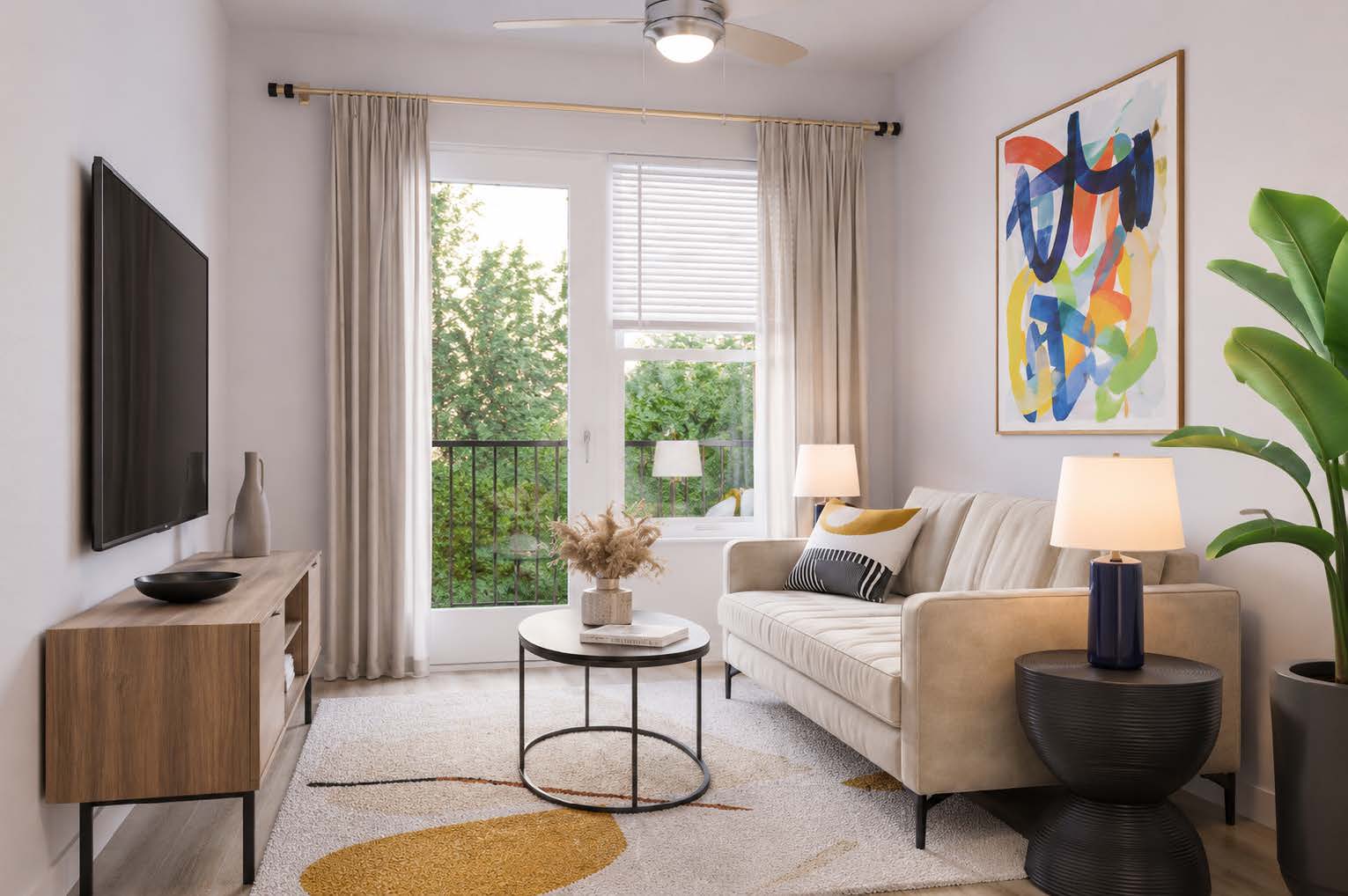
A good leasing team will do a live walkthrough on request. SOFI at 6311 offers virtual tours so you can see the actual community before you fly out.
Airport access without airport noise
If you fly often — and a lot of California transplants keep bicoastal work — South Austin's geography is a quiet advantage. Austin-Bergstrom International Airport sits on the south side of the river, so south-side residents skip both the river crossing and the downtown core on the way to the gate. SOFI at 6311 is close enough for a short, toll-free drive, far enough out to keep evenings quiet.
See it before you commit
The financial case for moving to Austin from California is strong, and South Austin is the landing spot that balances cost, access, and quiet. SOFI at 6311 is a 2025-built community in the heart of it, with studio, one-, and two-bedroom floor plans. Schedule a virtual tour and judge it for yourself.
Frequently asked questions
Is moving to Austin from California worth it financially?
For most renters earning six figures, yes. Texas has no state income tax, and Austin rents have fallen to well below comparable California metros. The biggest offset — higher property taxes — mainly affects buyers, not renters.
Does Texas really have no state income tax?
Correct. The Texas Comptroller confirms the state does not levy an individual income tax. You'll still owe federal income tax.
How much cheaper is rent in Austin than California?
It varies by unit and city, but 2026 analyses show Austin one-bedrooms renting for less than half of comparable San Francisco units, with the savings growing alongside the income-tax advantage at higher salaries.
Which part of Austin is best for California transplants?
It depends on priorities. East Austin offers urban energy; the northern suburbs offer space; South Austin balances commute access, airport proximity, and a quieter residential feel.
What's the summer like in Austin compared to California?
Hotter and more humid, with AC running heavily from May into October. Spring and fall are the reward — genuinely pleasant shoulder seasons.
Can I lease an apartment in Austin before I move?
Yes. Request a live video walkthrough of the specific unit, confirm what's included in rent, and check the commute on a map. Communities like SOFI at 6311 offer virtual tours for remote renters.
The post Moving to Austin From California: Renter’s Guide appeared first on SOFI at 6311 Blog.
]]>