

TL;DR
- East Coasters keep moving to Austin for the same core reasons: no state income tax, lower housing costs, and an outdoor‑forward lifestyle.
- The dollar stretches further — Austin's median rent has fallen for nearly two years and sits below the national median, per the Pew Charitable Trusts.
- Austin's layout confuses transit-dependent NYC and Chicago transplants — plan to drive, and pick a location with route options.
- The first 90 days have a checklist: license, registration, utilities, voter registration.
- SOFI at 6311 is a 2025-built South Austin community with airport access on the same side of the river. Schedule a virtual tour.
If you're relocating to Austin from New York, Chicago, Miami, Atlanta, or DC, you're following a well-worn path — and most of what draws people here holds up. But the East Coast-to-Austin move is a real lifestyle shift, not just a change of address. Here's the honest version, plus a first-90-days checklist to get settled fast.
Why Austin keeps drawing East Coasters
The pull factors are consistent: no state income tax, housing that costs a fraction of coastal cities, a strong job market, and an outdoor culture that's hard to match in a dense Northeast metro. For someone trading a small, expensive apartment for more space and more take-home pay, the math is compelling.
Where do they land? Not just downtown. East Coast transplants spread across the metro by priority — walkability, commute, schools, or value. South Austin tends to win for renters who want neighborhood character and access without the central-city premium.
The cost-of-living shift
This is the headline. Texas has no individual state income tax, which means more of your paycheck stays with you — a significant change coming from high-tax states like New York or Illinois.
Housing is where the difference becomes tangible. Austin's median rent has fallen for nearly two years; the Pew Charitable Trusts reported it dropped to around $1,296 by January 2026 — below the U.S. median — as a wave of new construction reset the market. Coming from a city where a one-bedroom runs well over $3,000, the contrast is dramatic.
Two honest caveats:
- Property taxes are higher in Texas — relevant if you buy, less so if you rent.
- Run your own numbers. Don't trust a single blog; check current figures against a primary source like the U.S. Bureau of Labor Statistics before you budget.
Austin's grid vs. a real grid
Here's the adjustment NYC and Chicago transplants underestimate: Austin is not a transit city. Coming from a place where you never needed a car, you'll need one here.
The layout adds to the confusion. Austin is shaped by the Colorado River and I-35 with limited crossings, so distance doesn't equal time — a place that looks close on a map can be a long trip if it's on the wrong side of a crossing. (This is the same dynamic that makes a route with multiple options so valuable; more on that below.)
The practical takeaway: pick a location with route redundancy. South Austin gives you South 1st, South Congress, South Lamar, Ben White, and I-35 — many ways in and out, rather than one corridor that defines your commute.
The climate transition
Be honest with yourself about the weather trade.
- Summers are long and hot. Air conditioning runs hard from May into October — different from a Northeast summer, and a real adjustment.
- Winters are mild. No nor'easters, no months of gray. This is the upside East Coasters notice immediately.
- Storm awareness shifts. Tornado and severe-thunderstorm season replaces blizzards and ice. Learn the local alert systems.
The shoulder seasons — spring and fall — are the reward, and they're excellent.
Why South Austin holds up
For an East Coast transplant weighing neighborhoods, South Austin checks the core boxes: a reasonable commute (about 12 minutes to downtown outside of traffic), real walkable neighborhood pockets, and strong access. It also sits on the same side of the river as Austin-Bergstrom International Airport — a bigger deal for East Coasters, who tend to fly home more often. Frequent flights and no river crossing make airport runs a short, toll-free drive.
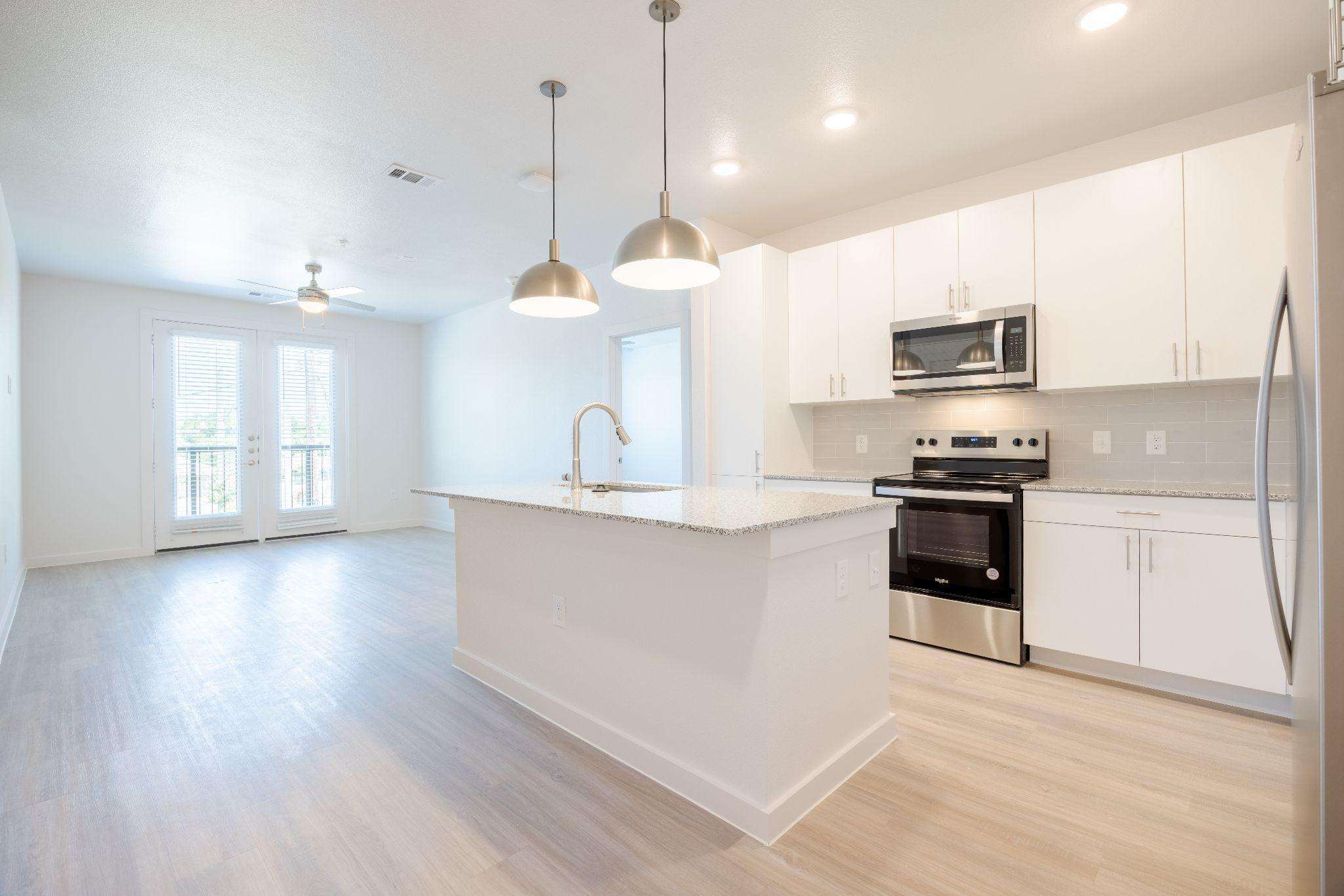
SOFI at 6311 is a 2025-built community in that pocket, with studio, one-, and two-bedroom floor plans and a South Austin location built around that access.
Your first 90 days: the checklist
Texas gives new residents a window to handle the official stuff. Don't let it slide:
- Driver's license — Texas generally requires new residents to get a Texas license within 90 days. Book a Texas DPS appointment early; slots fill up.
- Vehicle registration and inspection — register your vehicle with the county; Texas has its own process and timeline.
- Voter registration — update your registration once you've established residency.
- Utilities and internet — set up electricity, water, and internet before move-in day so you're not unpacking in the dark.
- Establish residency basics — update your address with banks, employers, and the USPS.
Knock these out in the first month and the rest of the transition gets a lot smoother.
Settle in and see the neighborhood
The East Coast-to-Austin move pays off most when you land somewhere with access, space, and a short trip back to the airport. Schedule a virtual tour at SOFI at 6311 and see how the South Austin location fits your first 90 days.
Frequently asked questions
Is moving to Austin from the East Coast worth it?
For many renters, yes. No state income tax, housing well below coastal-city costs, and a strong job market are the core draws. The main adjustments are car dependence and hot summers.
How much cheaper is Austin than New York or Chicago?
Significantly on housing. Austin's median rent fell below the U.S. median by early 2026, while a New York one-bedroom often exceeds $3,000. Combined with no state income tax, take-home and housing savings can be substantial — run current figures for your situation.
Do I need a car in Austin?
Almost certainly. Unlike NYC or Chicago, Austin is car-dependent with limited transit. Choose a location with multiple route options to manage traffic.
What's the weather like compared to the Northeast?
Summers are long and hot with heavy AC use; winters are mild with no snow. Spring and fall are excellent. Severe-weather awareness shifts from blizzards to thunderstorms and tornadoes.
What do I need to do in my first 90 days in Texas?
Get a Texas driver's license (generally required within 90 days), register and inspect your vehicle, update voter registration, set up utilities and internet, and change your address with banks and employers.
Why choose South Austin for an East Coast relocation?
It balances a short downtown commute, walkable neighborhood character, multiple route options, and airport access on the same side of the river — convenient for frequent East Coast flights.